The Art of Wearing
Chikankari
A complete guide to styling India’s most elegant embroidery — from morning occasions to moonlit evenings
This guide is for those who have fallen in love with Chikankari — and want to wear it with the elegance it deserves.
Understand the Occasion First
Chikankari is beautifully versatile, but knowing the occasion shapes every styling decision. A crisp cotton Chikankari kurta carries you effortlessly through a summer afternoon gathering, while a sheer georgette piece with delicate shadow work belongs to an evening of celebration.
The fabric holds the clue. Cotton and mulmul speak of breezy, relaxed elegance — perfect for daytime wear, office settings, or casual lunches. Georgette and silk transform Chikankari into festive luxury, commanding presence at weddings, receptions, and formal occasions.
Colour is Everything — Let It Breathe
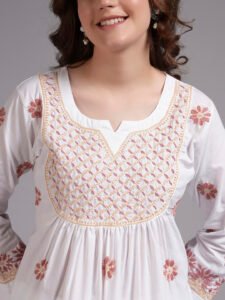
Traditional Chikankari lives in whites and off-whites — and for good reason. The embroidery is the art. When the base fabric is quiet, every flower, every vine, every buti gets to speak. White Chikankari against summer sunlight is among the most beautiful sights Indian fashion offers.
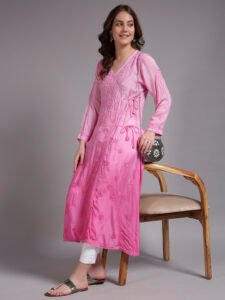
Yet the craft has evolved, and today Chikankari comes in the softest pastels — rose, mint, lavender, peach, powder blue, sage. These colours do not compete with the embroidery; they simply give it a new mood. The rule is simple: keep the colour gentle, and let the work shine.
For dupattas and bottom wear, choose tones within the same palette family. A blush pink kurta pairs exquisitely with a deeper rose palazzo or a plain white dupatta with delicate Chikankari border. Tonal dressing creates a harmony that feels luxurious without effort.
It is the embellishment.”
Pairing Jewellery with Grace
The golden rule of accessorising Chikankari: less is more, and what you choose must have character. The embroidery is already a work of art — your jewellery should complement it, not compete.
Traditional Lucknowi Chikankari finds its truest partner in silver and oxidised jewellery. There is a cultural and aesthetic logic to this — both arts emerged from Awadh’s refined sensibility. Oxidised silver earrings, a delicate necklace, or thin bangles create a beautifully cohesive Indian look.
For festive Chikankari in georgette or silk, polki, kundan, and real gold are perfectly suited. Pearl earrings with a Chikankari anarkali are timeless and will never date. For a modern sensibility, a single statement earring with a plain neck and loose hair is quietly stunning.
Footwear That Speaks the Same Language
Chikankari’s roots are in Lucknow — the city of tehzeeb, poetry, and refinement. The footwear you choose should carry that same spirit of considered elegance.
Mojaris and kolhapuris are the most natural companions to a Chikankari kurta set. They share the same handcrafted soul, the same Indian aesthetic vocabulary. Together, they create an ensemble that is rooted, confident, and deeply beautiful.
For formal or festive occasions, block heels or embellished sandals elevate the look appropriately. Heels add length to an anarkali or sharara silhouette and suit evening settings where a certain grandeur is called for.
Contemporary styling has seen Chikankari paired with white sneakers — and when done with intention (think a relaxed kurta-palazzo set and minimal hair), it creates a wonderful contrast of traditional craft and modern ease.
Draping the Dupatta — The Lost Art
No Chikankari look is complete without understanding the dupatta. It is not merely an accessory — it is the final note of the outfit, the gesture of grace that ties everything together.
A classic single-shoulder drape is timeless and works beautifully for most silhouettes. For a more contemporary feel, let the dupatta rest casually across both shoulders and fall freely — effortless yet composed. A dupatta pinned at both shoulders creates a structured, formal look suited to weddings and ceremonial occasions.
Hair & Makeup: The Finishing Touch
Chikankari has an inherent femininity and softness. Hair and makeup that respect this quality will always serve the look better than anything bold or contrasting.
A loose bun adorned with mogra flowers or a subtle pin is the most romantic pairing with Chikankari. A low chignon works beautifully for formal occasions. For a more modern approach, soft waves worn open allow the outfit to remain the focus while the hair adds a gentle warmth to the overall silhouette.
For makeup, think of Chikankari as a piece of poetry — it calls for dewy skin, a clean eye, and perhaps a wash of rose on the lips. A classic red lip can work beautifully with white or ivory Chikankari — the contrast is striking and timeless. What you want to avoid is heavy or theatrical makeup that shifts attention away from the artistry of the cloth.
Wear it with the patience it was made with
A single Chikankari piece can take weeks — sometimes months — for an artisan in Lucknow to complete. When you choose Chikankari, you carry that patience with you. Dress slowly. Drape with care. Walk knowing that what you wear is not simply fashion — it is a living piece of India’s most exquisite heritage.
That is the true art of wearing Chikankari.